Same Finances, Different Letterhead - Our UK Partner Visa Experience
A bit of a different one
If you normally turn up here for MongoDB, C# or me banging on about messaging
patterns, this one is going to be a bit of a surprise. There’s no code in it. No
benchmarks. Not a single IServiceCollection extension method anywhere.
I’ve written one non-technical post before and I said at the time it was a break from my usual technical ramblings. This is another one, and honestly it’s the hardest thing I’ve ever written for this blog.
Here’s why I’m publishing it anyway. Over the last six months my partner and I went through the UK Partner Visa process. We got refused. Then we applied again, changed nothing about our financial situation, and got approved. The only meaningful difference between the two applications was that the second one had a solicitor’s letterhead on the front of it.
That whole experience was, without exaggeration, the most stressful thing either of us has been through. And the thing that actually got us through it, in the window where it mattered, wasn’t any official channel. It was random people on the internet who’d been through the same thing and were generous enough to tell us what they’d learnt.
So this is me paying that forward. If you’re staring at a refusal letter right now wondering what on earth just happened, hopefully some of this helps. And if you’re not, then hopefully you’ll at least enjoy watching a government department tell a bloke who pays a genuinely upsetting amount of tax every year that he might need to start claiming benefits.
Fair warning: this is a long one, and I’m going to be quite rude about the Home Office. I feel like I’ve earned it.
The setup
My girlfriend Anahi is Peruvian. She’s a commercial manager. I’m a principal software engineer. We’ve been in a long-distance relationship for three years, bouncing back and forth between each other’s countries, and doing a fair bit of travelling in between so we could squeeze out every bit of time together around work.
I’m very lucky in that tech is flexible about where you sit, so I’ve spent a lot of time in South America working remotely. It’s a good life, but three years of airports gets old.
We’d had a baby on the cards for a while, and we both felt strongly that being together through the pregnancy and the birth wasn’t a nice-to-have. Both parents being there in the early days isn’t a lifestyle choice for us, it’s the whole point.
Anahi is due on the 5th of September 2026. So, being the sort of people who plan things, we started looking at the Partner Visa well ahead of time.
We read the requirements. We read them again. And honestly, our reaction was: is that it?
- Relationship proof - three years, constant travel, both families involved.
- Previous relationships - nothing complicated.
- Financial requirement - £29,000 a year. I was genuinely surprised how low that is.
- Adequate accommodation - I own a four-bedroom house in York.
- English language - Anahi has a master’s degree taught in English, so she’s exempt. She also speaks Spanish, Portuguese, and bits of French and Italian. She shows up pretty much every British person she meets, including me, who can barely manage the one.
- TB screening - done.
We ticked every box, most of them by a mile. So we decided to do the first application ourselves, without a solicitor.
Reader, this was the mistake. But hold that thought.
We may have over-engineered the application
The bit we were actually nervous about was the relationship evidence, because nobody tells you how much is enough. So we went hard at it. Every flight. Every trip. Photos with her parents, photos with mine, holidays, the lot. We counted up how many times we’d seen each other and how long we’d spent together.
And because I’m a bit of a nerd about Word, I built the whole thing properly: table of contents, auto-generated figure numbering, cross-references that actually linked back to the right exhibit. If you’re going to do a job, do it properly.
I later sent that same bundle to three different immigration solicitors. All three said it was one of the best-put-together applications they’d seen.
Remember that, because it becomes quite funny later.
We submitted on the 18th of March 2026 (the application itself is dated the 4th of March, which is the date the Home Office uses). We didn’t pay for the priority service, because it was an extra £500 and the published guidance said up to 12 weeks from outside the UK. We had months. What could possibly go wrong.
Hang on, why is a British visa priced in dollars?
Here’s the first thing that made us go “eh?”.
The UK government publishes its visa fees in pounds. We are applying for a British visa, to live in Britain, sponsored by a British citizen who is paid in pounds. Anahi was applying from Peru, where the currency is the Peruvian Sol.
So naturally, the fee is charged in US dollars.
Neither of us has dollars. Nobody involved in this transaction has dollars. There is no dollar-shaped participant anywhere in this arrangement. And yet:
- Anahi paid the first application fee PEN → USD → GBP. Three currencies. Two conversions. To pay a British government department.
- I paid the NHS surcharge GBP → USD → GBP. I had pounds. They wanted pounds. We went via dollars anyway.
I’ve worked in fintech. I know exactly what’s happening here, because doing FX on someone else’s behalf is one of the oldest ways in the world to shave a few points off a transaction while looking like you’re providing a service. There’s a spread, and someone is earning it, and it isn’t us.
And here’s the bit I only found out afterwards, which is so much better than any conspiracy theory I’d cooked up.
It’s published policy. The Home Office Exchange Rate Policy says the rates they charge you are taken from the Oanda live bid rate plus a 4% margin, reviewed weekly.
Four percent. Written down. In a document. On gov.uk.
So it isn’t a shadowy middleman skimming the till. It’s the Home Office, openly, in public, adding four percent to every fee paid in a foreign currency, to cover their own exchange rate risk. Risk that would not exist if they simply let a British citizen pay a British government department in British pounds.
I actually emailed the Home Office exchange rate team about this, asking a very simple question: can we just pay in pounds, and if so can I pay from my UK account?
I’m still waiting. If they reply I’ll add an update. The baby will probably be at school.
I’ll come back to exactly what this cost us further down, because it deserves its own table.
The £2.74 question
Twelve weeks came and went. Nothing.
If you want to ask the Home Office what’s happening with your application, you can, but there’s a catch: it’s a chargeable service. £2.74 a pop. You pay a government department for the privilege of asking that same government department what it’s doing with the money you already gave it.
So we paid our £2.74. Here’s what came back on the 11th of June:
With regards to your enquiry about the status of your application, I can confirm that your application is being considered and is currently awaiting a decision.
Cracking. Two pounds seventy-four for a sentence that could be generated by a coin toss.
There was also this gem in the same email:
We strongly recommend that you do not buy a non-refundable, non-flexible ticket to the UK, until your visa application has been approved and you have received your documents.
Which is genuinely sound advice, and also a beautiful piece of institutional self-awareness. We cannot tell you how long this will take, so please arrange your entire life around the possibility that it takes forever.
And my personal favourite, the sign-off:
Did you know you can find helpful guidance on the visa application process and useful information on processing times by following our official X (formerly twitter) account, @ukvigovuk
We can’t tell you about your application. Have you tried Twitter?
The next day, the 12th of June, the refusal landed.
Now here’s the bit that bothers me. The PDF attached to that email was dated the 8th of June. So the decision had been made four days earlier. We paid £2.74 on the 10th, were told on the 11th that it was “awaiting a decision” when it had already been decided, and then got the refusal on the 12th.
Either that’s a remarkable coincidence, or our refusal was sat on a shelf and the enquiry knocked it off. I know which one I’d put money on.
It gets better
We replied to that same enquiry thread, questioning the financial reasoning. On the 17th of June we got this back:
With regards to your query please clarify type of visa you applied for: Unmarried partner Visa What is the immigration status of your sponsor in the UK?
Please provide copies of any emails received form the relevant department after biometrics appointment.
Read that again. They have the application reference. They have just refused the application. And they’re asking us to send them copies of the emails they sent us.
Then, on the 24th of June, this arrived:
Dear 55XXXXX,
Your opinion matters to us. Please take a moment to share your feedback on the service provided.
Not “Dear Anahi”. Just our enquiry reference number, sat there where her name should have been. Anahi forwarded it to me with a two-word message: “is this a joke?”
Your opinion matters to us so much that we have not troubled ourselves to find out your name.
The refusal itself
Right, so what actually went wrong?
Timing. Pure, stupid timing.
Shortly before we applied, I was made redundant from a permanent role I’d been in for two years. The week after, I moved straight into a six-month self-employed contract. No gap. More than enough money either side of it. I just happened to change the shape of my employment at exactly the wrong moment.
Here’s the thing that still makes me laugh. The refusal letter says this, in a single paragraph:
In order to meet the financial requirements of Appendix FM your sponsor needs a gross income of at least £29,000 per annum. You state that your sponsor has been self-employed and earns an annual income of £[redacted].
They wrote the threshold. Then, in the very next sentence, they wrote a bigger one. And then refused us.
It gets sillier. The letter goes on to acknowledge the previous salary too:
As a result, the income claimed, including the stated £[redacted] earned in the preceding 12-month period with their employment with [my previous employer], cannot be considered, as it is not evidenced in accordance with the requirements of Category F or G.
So they had, written down in their own refusal letter, a full year of PAYE earnings well clear of their own threshold, immediately followed by a signed contract at a day rate that cleared it just as comfortably. And a pile of cash savings on top. And they went: nope.
The evidence that could not exist
Because I’d ticked “self-employed”, the whole thing got assessed under Category F of Appendix FM-SE, which wants a completed financial year of trading. The letter lists what we failed to provide:
- Evidence covering a full financial year of trading
- HMRC tax documentation (SA302/SA300) for a completed financial year
- Full corresponding bank statements and accounts for the required period
Every single one of those is physically impossible for someone who started self-employment three weeks ago.
I couldn’t provide a year of trading, because I’d been trading for about a fortnight. I couldn’t provide a self-assessment return, because I’d been on PAYE the previous year and therefore wasn’t required to file one. I couldn’t provide twelve months of business bank statements, because the business bank account was newer than most of the food in my fridge.
We had said all of this. Clearly. In the application. With letters from both the old employer and the new client confirming the numbers, plus a year of payslips, plus both contracts, plus the savings.
The letter’s answer to that:
The evidential flexibility provisions under paragraph D of Appendix FM-SE have been considered, however, these do not apply where the specified evidence for a full financial year is entirely absent.
We have considered being flexible, and we have decided against it.
The rules genuinely have no box for “permanent employee on Monday, contractor on the following Monday”. Employment income lives in Categories A and B. Self-employment lives in Categories F and G. They are assessed separately and you can’t just add them together. Category A wants employment you’re currently in. Category F wants a completed tax year of trading. If you step from one to the other, you land in the gap between them, and there is no category down there.
And having spent a good chunk of my career building workflow software for case handlers, I recognise exactly what this is: someone following a decision tree, hitting a branch with no valid path, and taking the exit marked refuse.
In any well-designed process, that’s the point where the case gets escalated to a human being who is allowed to think. That clearly didn’t happen. What we got instead was a caseworker who could see the threshold and the actual income on the same page and still couldn’t join them up.
“Without recourse to public funds”
Right. Deep breath. This is the bit that made me properly angry, and it’s the reason I’m writing this post at all.
Buried in the refusal is this:
You have not provided any evidence to demonstrate you will have any adequate accommodation available to you upon arrival into the UK. I am therefore not satisfied that there will be adequate accommodation available to you in the UK without recourse to public funds.
Let’s take the accommodation bit first, because it’s straightforwardly wrong. The application said, in writing, that she would be living in my house. Not a rented room. Not a mate’s sofa. My four-bedroom house, in York, which I own, and which I have owned for years. That was in the application.
But the second half is the part that genuinely astonishes me, and it’s worth slowing down for.
A Partner Visa is granted with “no recourse to public funds” as a condition of the visa itself. It’s not a risk the Home Office is bravely guarding against. It’s a restriction they attach, to this exact visa, as a matter of routine, under section 3(1)(c)(ii) of the Immigration Act 1971. It’s printed on the grant.
And “public funds” isn’t a vague notion either. It’s a defined list in paragraph 6 of the Immigration Rules, and it’s specific: Universal Credit, Income Support, income-based Jobseeker’s Allowance, Pension Credit, Child Benefit, Child and Working Tax Credit, Housing Benefit, Council Tax Reduction, Personal Independence Payment, Attendance Allowance, Carer’s Allowance, homelessness assistance, and a handful of others. A person on a Partner Visa cannot claim any of them. That is the entire point. And the whole reason the minimum income requirement exists in the first place is to check the sponsor can support their partner without recourse to public funds.
So the Home Office has managed to refuse an application on the grounds that the applicant might need to access a category of support that:
- she is legally barred from accessing,
- by a condition that the Home Office themselves would have imposed,
- on the very visa they were refusing.
It’s circular reasoning wearing a hi-vis jacket.
And here’s what really gets me. This isn’t a subtle point of law. This isn’t some obscure sub-paragraph that a busy caseworker might reasonably miss. This is the headline condition of the route they were assessing. It’s in the name of the route. If you don’t understand that a Partner Visa carries an NRPF condition, you should not be deciding Partner Visa applications. That’s not a gotcha, that’s day-one training.
While we’re here, let’s put the “coming over here for the free NHS” thing to bed as well, because I’ve seen it a hundred times online and it drives me mad. The NHS is not free for migrants. You pay the Immigration Health Surcharge, up front, for the entire length of the visa, before you’ve set foot in the country. It’s £1,035 per person per year, and because the initial partner grant runs to 33 months and the surcharge rounds up to whole years, you pay for three: £3,105, in a single lump, years before you’d use any of it.
That’s more than a lot of countries’ private health insurance.
And in our case it was doubly daft, because Anahi already has excellent private healthcare in Peru. We weren’t coming for the NHS. Frankly, having spent time in both systems, I’d have taken the Peruvian option: I spent the better part of a year failing to get a knee looked at here, gave up, saw a doctor once in Lima and got scanned the same week.
So: we pay thousands up front for healthcare, we’re legally barred from claiming a penny of public money, and the refusal letter is worried we can’t manage without benefits. Right.
“You can maintain your relationship over social media”
I saved my favourite for its own section.
Under the Article 8 consideration, the letter says:
Whilst it is acknowledged that refusal may cause inconvenience and emotional difficulty, it is considered that your family life can continue through modern means of communication, such as telephone calls, video calls, messaging applications, and social media.
My pregnant partner is 6,000 miles away. Our first child is due in September.
And the official position of His Majesty’s Government is that this is fine, because Instagram exists.
Picture it. Anahi in a delivery room in Lima. Me in York. Waving at a newborn through an iPad. Don’t worry love, I’ve liked the story.
And then, three days later
This is the bit I genuinely could not have made up.
The refusal letter is dated 8 June 2026. It landed in my inbox on the 12th.
On 15 June 2026, three days after that, the then-Prime Minister stood up and announced that social media would be banned outright for under-16s, on the grounds that it is actively harmful to children. Instagram is named in the list. Keir Starmer called it “a line in the sand”, and said it would “give kids their childhood back”.
So within the space of a single week, the same government managed to hold both of these positions at once:
- Social media is so damaging to children that we are going to make it illegal for them to have it.
- Social media is a perfectly adequate substitute for a child’s father.
Under his own government’s policy, our lad won’t be allowed on Instagram until 2042. Which is a bit awkward, given the Home Office has it written down as his primary means of maintaining a relationship with his dad.
They did exempt WhatsApp and Signal from the ban, mind. So there was a version of that paragraph that actually worked. They just didn’t write it.
Starmer has since resigned. I’m choosing to take full credit.
Anyway. Back to the letter, because there’s a second line in that same Article 8 paragraph that’s almost worse:
You and your partner chose to establish and develop your family life knowing that you would be required to meet the Immigration Rules in order to live together in the UK, and that your immigration status was not secure.
You chose to fall in love with a foreigner. Sounds like a you problem, mate.
I keep coming back to the fact that a human being typed these words about another human being’s family, and then sent them.
Right, so who do we call?
We were three months in, thousands down, refused, and Anahi was pregnant. Time was very much not on our side. So I started shouting into every channel I could find.
The MP
Rachael Maskell is the MP for York Central. I rang her office six times. I left a voicemail. On the 13th of June, the day after the refusal landed, I sent a detailed email laying the whole thing out, with the refusal letter, the employment letters and the mortgage statement attached. The subject line began with the word “Urgent”, because it was.
What came back, the same afternoon, was an automatic reply. It explained that an MP can only help their own constituents, and so it was important that I resend my email with my full name, postal address and contact telephone number.
And then we waited. Nothing came back for a long time, which when you’re pregnant, refused and watching a due date come towards you feels considerably longer than it looks written down.
They did get back to us in the end, and they’ve since been genuinely helpful. But the timing of it deserves its own section later on, so hold that thought.
Citizens Advice
We were pointed at Citizens Advice in York. They did reply, and quickly, which I appreciated. Unfortunately the reply was a generic wall of links back to the Home Office website, plus some advice that didn’t apply to our situation at all.
Cheers. We’d read those pages. That’s how we got here.
And then, out of desperation, I posted about it on LinkedIn.
I cannot tell you how much that changed things. Complete strangers came out of the woodwork with real, specific, useful help. People who’d been through it. People who knew which category we should have been assessed under. People who just wanted to say “this happened to us too, you’re not going mad”.
One of them, Bibhash Dash, offered to cook for us and my family once it was all over. We still owe him that visit. Probably once we’ve learnt how to leave the house with a baby.
The gap between how the institutions responded and how ordinary people responded is the single thing I’ll remember most about all of this.
What everyone else told us
Once I started talking, a pattern showed up almost immediately, and it’s the most damning thing in this entire post.
Almost everyone who applied on their own got refused first time. Then they applied again with a solicitor and got approved. Nothing about their circumstances had changed.
Not their income. Not their relationship. Not their house. The only new variable was a law firm’s name on the paperwork.
I contacted six solicitors and a barrister. Every single one said the refusal made no sense. The three who read the full bundle said the evidence was more than enough to show we were financially sound, and that our application was one of the best they’d seen.
A few other things came out of those conversations that I’m still chewing on.
The savings workaround
Several people told me the same trick: get someone to lend you the cash, park it in your account for six months, apply, hand it back.
Because savings are assessed on cash held for six continuous months, in an account with a regulated financial institution, and nothing else. If you’re going the savings-only route the formula is £16,000 plus 2.5 times the shortfall, so against a £29,000 threshold that’s £88,500 sat still, doing nothing, for half a year.
Nobody checks whose money it originally was.
Which brings me to the bit that really exposes how crude this test is.
The Home Office can only see cash
I own a house. I hold stocks and shares. None of it counts for anything.
But here’s the flip side, and it’s much worse: debt doesn’t count either.
You could be drowning in loans, credit cards and arrears, and as long as £29,000 a year lands in your account, you pass. Someone with no debt, a paid-down mortgage and a portfolio can fail. There is no net-worth test, no affordability test, nothing that a mortgage lender would recognise as financial assessment. It is a single number, checked against a single threshold, evidenced in a single approved format.
For a test whose stated purpose is “can this couple support themselves”, that is an extraordinarily unserious way of finding out.
The appeal route
The refusal comes with a right of appeal: 28 days to lodge, and yes, that costs money too. £80 for a decision on the papers, £140 for an oral hearing.
Two people on LinkedIn told me they’d appealed. One waited 18 months. The other waited two years.
Both were eventually approved.
Sit with that. Two separate people, refused, waited up to two years, and were then told the original decision was wrong. And when I went looking at the published tribunal numbers, they turn out to be entirely typical rather than unlucky:
- Around 36% of determined immigration appeals are allowed - the tribunal looks at the same facts and says the Home Office got it wrong.
- On top of that, a large share of appeals never reach a hearing because the Home Office withdraws its own decision first. Which is, let’s be honest, a loss with better manners.
- Meanwhile the First-tier Tribunal’s open caseload hit over 150,000 cases by March 2026, up around 86% in a year.
So a very substantial chunk of refusals are simply wrong, and the queue to prove it is now long enough to have a child, teach it to walk, and get it talking.
Every solicitor I spoke to said the same: appeals do work, they just take so long that for most people they’re useless. And crucially, an appeal is far more useful if you’re already in the UK, because you can stay while it runs. Anahi was outside the country. An 18-month appeal would have meant our son was walking before it resolved.
So the “correct” remedy for a wrong decision is one that most families can’t realistically use. Which means the wrong decisions mostly just… stand.
The advice that made us most uncomfortable
Three of the solicitors and the barrister all said some version of the same thing, and it floored us: you’ve gone about this the hard way.
The easier route, apparently, would have been to bring Anahi over as a visitor, have the baby here, and then apply on the basis of being the parent of a British child under Article 8.
We hated that idea. It felt like using our son as a bargaining chip, and we wanted to do this properly. But it was suggested to us, repeatedly, by professionals, as the sensible option.
And they also said that having a refusal on record would now make that route look worse, like we were hunting for a way in.
So the system had managed to make the honest route more expensive, slower and more stressful than the workaround, and then penalise us for having tried the honest route first. Marvellous.
So I sent a Freedom of Information request
By this point I was less upset and more curious. The thing that nagged at me was the timing of that refusal, so I wanted to understand the actual processing numbers. How long do these applications really take? How long do they sit before anyone touches them?
So I submitted an FOI request asking for processing times for spouse, civil partner and unmarried partner applications over a twelve-month period: standard versus priority, broken down by country, with min, max, mean and median, plus the gap between submission and a caseworker actually picking the case up.
Basic operational metrics. The sort of thing any organisation processing applications would have on a dashboard.
Attempt one came back refused. Not on the substance, on my name:
Section 8(1) of the Freedom of Information Act 2000 requires that a request for information must provide enough of their real name to give anyone reading that request a reasonable indication of their identity. Your email does not do this.
My name was in the email. It was in the signature, and it was in the email address. They even helpfully listed the accepted formats, like a form validation error written by a person.
So we resubmitted, this time explicitly writing “for the purposes of section 8(1) of the Act, my name is…” in the body, so there could be no confusion.
They acknowledged it and said twenty working days, which is the statutory deadline under section 10 of the Act.
They took twenty-five. Five working days late, on a statutory deadline. For context, across central government in 2025 around 87% of FOI requests were answered inside the twenty days, so this wasn’t the system creaking, this was us landing in the unlucky thirteen percent. From the department that will refuse your visa application for being a fortnight short on paperwork.
And when it did arrive, the answer was:
Under section 12(1) of the FOIA, the Home Office is not obliged to comply with an information request where to do so would exceed the appropriate limit. We estimate that the cost of locating and collating any relevant information and extracting the information to meet your request would exceed the appropriate limit of £600 […] The £600 limit is based on work being carried out at a rate of £25 per hour, which equates to 24 hours of work per request.
That £600 and £25 an hour come from the Freedom of Information and Data Protection (Appropriate Limit and Fees) Regulations 2004, so those bits are entirely legitimate. It’s the estimate I have a problem with.
And why?
This is because in order to respond to your request for information we would need to conduct a manual trawl of data to provide the level of detail you have requested.
A manual trawl.
Let me translate. The Home Office is telling us that working out how long it takes them to process a visa application would require more than three working days of a human being going through it by hand.
I have spent my entire career building systems that process things. Every single one of them can tell you, instantly, how many items are in the queue, how long they’ve been sitting there, and what the p50 and p95 processing times look like. Not because we’re clever. Because that is the absolute bare minimum required to run the thing.
Without those numbers, you cannot answer basic questions like:
- How many caseworkers do we need next quarter?
- Is the team we hired in January actually helping?
- Which route is falling behind?
- Is priority service, which we charge £500 for, actually faster?
If you ran a KYC operation at a bank and told the board you couldn’t produce processing times without three days of manual work, you’d be looking for a new job by lunchtime. This is not an exotic ask. This is table stakes.
So there are only two possibilities. Either the Home Office genuinely doesn’t know how its own decision-making performs, in which case the department is being run blind. Or it does know and doesn’t fancy publishing it, in which case section 12 is being used as a shield.
I honestly can’t decide which is worse. Section 12 does seem to be the get-out-of-jail card of choice, mind: across government, roughly a quarter of all cases where information gets withheld lean on it.
Also, and I say this with love: this is a query. It’s a GROUP BY with a couple
of date subtractions in it. In Mongo it’s an aggregation pipeline with a $group
and a $percentile. It is not archaeology.
And it’s 2026. Have they not heard of Claude?
I can paste a schema into a chat window, type “min, max, mean and median processing time by route and country for the last twelve months, split by priority”, and have working SQL back before the kettle’s boiled. Same again for the Mongo version. Writing the query stopped being the hard part a good while ago. The hard part is knowing what to ask for, and I’d already done that bit for them, in writing, in the request.
So what exactly is the reporting team doing for three solid days? Twenty-four hours of human effort, billed to the taxpayer at £25 an hour, to produce numbers that any half-decent platform would have on a dashboard already.
The offer stands, by the way. Give me read access for an afternoon and I’ll do it for the price of a coffee, which by their own reckoning saves the taxpayer £599. And if they’d rather keep it in-house, I’ll come in and give the reporting team a crash course. Free of charge. I do this for a living, and I have an unusual amount of motivation.
A theory about metrics
I build software for a living, which means I’ve watched a lot of teams get measured, and I have never once seen a metric that didn’t eventually get gamed. Goodhart’s Law never loses.
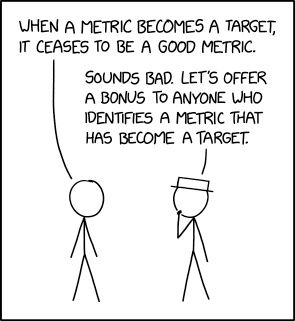
So when I see the Home Office posting cheerful stats on social media about processing performance, my first instinct isn’t “how nice”, it’s “which number are we optimising”.
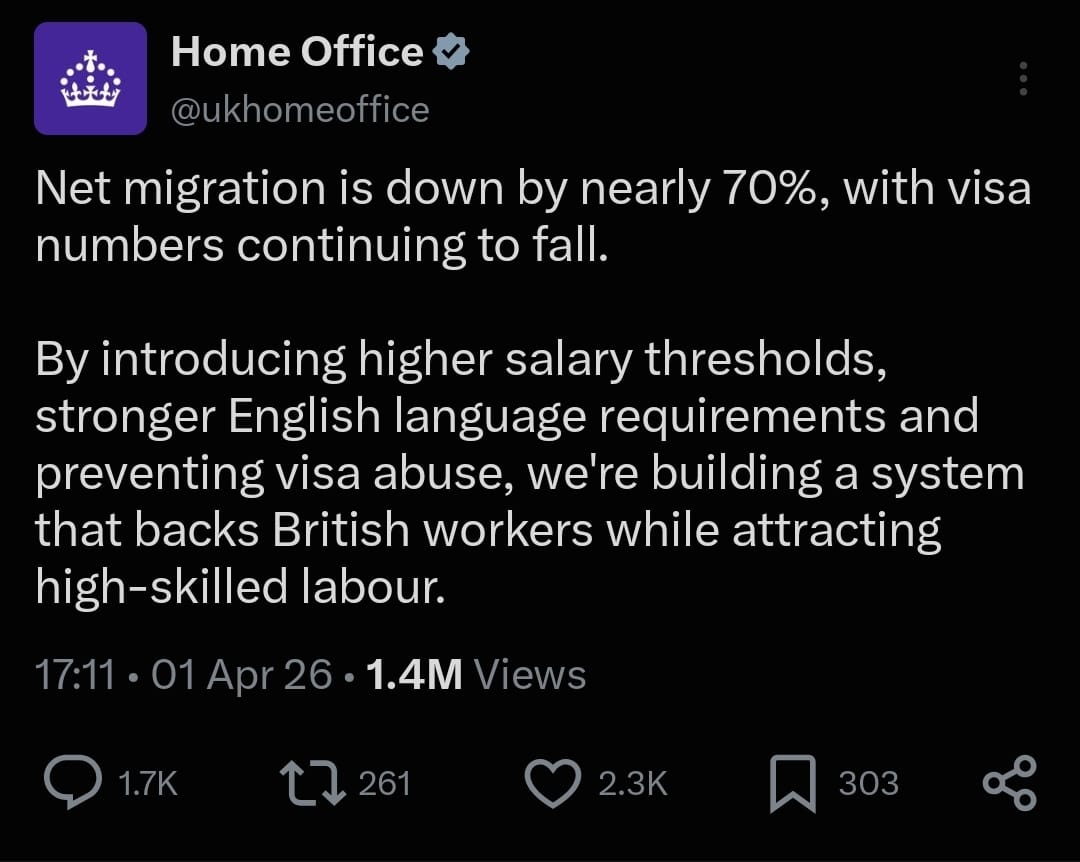
Let’s play this out. Say 100 couples apply. All 100 get refused on some technical evidential point. All 100 apply again, this time with a solicitor, and all 100 get approved.
What just happened to the numbers?
- Applications processed: 200 instead of 100. Throughput doubled.
- Approval rate: still looks fine, because the second batch all sailed through.
- Fee income: doubled. At £2,064 a go, that’s an extra £206,400 from the same hundred families. Plus a chunk of them will have paid £500 for priority the second time round because they’re now desperate. Plus the FX spread on every single payment.
Now, I want to be honest here: I can’t prove any of this. That’s rather the point of the FOI request, and you’ve seen how that went. The Home Office is a black box, and I’m not going to stand here and claim I’ve uncovered a conspiracy.
But when every single person you speak to describes the identical sequence - refused alone, approved with a solicitor, nothing changed in between - you start wondering whether it’s really a coincidence. That’s an awful lot of independent people falling into the same hole.
And the thing is, the FOI response would have settled it either way. That’s what makes the refusal so frustrating. If the numbers were fine, publishing them would have shut me up completely.
Round two: same finances, different letterhead
By now we’d worked out the actual lesson, which nobody puts on gov.uk: it isn’t about the evidence, it’s about the packaging. A covering letter on legal letterhead makes a caseworker treat the same documents differently.
That is not how a rules-based system is supposed to work. But it is how this one does.
So we went with IMD Corporate. Choosing was genuinely overwhelming, but their reviews were good and the information they gave us up front was straight and useful. £2,500.
Here’s what we did differently the second time:
- Sold shares to turn assets into cash. Not because we needed the money, but because the Home Office only counts cash, so we converted things it can’t see into things it can. We were richer on paper before we did it.
- Got the banks to sign letters confirming the balances. Because apparently a bank statement, which is a document produced by a bank, showing a balance, is not sufficiently clear that a bank holds that balance.
- Went back over the house. Mortgage statement, title deeds, council tax bill, electoral register. All to prove the thing that had already been stated plainly the first time.
- Paid the £500 for priority. Which, spoiler, we’ll come back to.
Special mention to York council tax office, who told me it would take two weeks to email me a PDF of my own council tax bill, and that posting a physical copy would be faster than sending an email.
I want to stress that I’m not making that up. Every time I deal with a government body in this country I come away feeling like I’ve slipped into a parallel universe with slightly different physics.
Meanwhile Anahi still had a flight booked for the 25th of July. We’d sorted it months earlier. She’s Peruvian, so she can come as a visitor on an ETA anyway, but travelling on a visitor route with a fresh visa refusal on your record while visibly pregnant is a genuinely frightening prospect.
Our solicitor prepared a letter for Border Force explaining the situation, and we put together a pack proving she intended to leave: return flights, a course she’s enrolled on at Manchester Uni in October, and NHS documentation about what giving birth here would cost as a private patient. (Which, since we’re on the subject of free healthcare, was not cheap.)
Small thing that made me smile: the first draft of that letter described Anahi as my spouse. We’re not married, which is rather the entire reason we were applying under the unmarried partner route. Anahi spotted it and had it corrected the same day. Even the professionals get tripped up by this stuff.
On the 25th of July she landed. Her email to the solicitor said simply: “Everything ok in border control. Thanks!!”
I have rarely been so relieved by a sentence with that little content in it.
Priority, apparently, is a state of mind
Priority service is 30 working days for family applications from outside the UK. Or rather, in gov.uk’s own carefully chosen word, you’ll “usually” get a decision in 30 working days. We’d paid the £500.
On the 31st of July, with the clock running down and Anahi now heavily pregnant, we paid another £2.74 to ask what was going on:
I can confirm that your application is being considered and is currently awaiting a decision.
Please note, the priority service does not guarantee that you will receive a decision within a certain number of days. It only means that your application would be put in front of the queue.
Five hundred pounds to be put “in front of the queue”, with no commitment about what happens next. That’s not a service level, that’s a raffle ticket.
Then this, which I’ve read about twenty times now:
We do not have access to specific case information and so progress updates could be subject to change.
The UK Visas and Immigration contact centre. Does not have access. To visa information.
So what exactly am I paying £2.74 for?
By the 11th of August even our solicitor was baffled. Her email that morning said:
Still no communication from the Home Office. Given that you paid priority, we should have their decision already.
We chased again, hard, making very clear that Anahi was 36 weeks pregnant and that this was becoming urgent in a way that a spreadsheet doesn’t capture.
And then, a few hours later, it landed.
Approved.
We were both working from home. Anahi came flying up the stairs shouting. I don’t think either of us did anything useful for the rest of the day.
Same income. Same house. Same relationship. Same savings, just in a different shape. Same everything.
Different letterhead.
Not done yet: the eVisa hokey-cokey
You’d think that’s the end of it. It was not.
The visa is an eVisa. Digital. No sticker in the passport, no vignette, nothing physical at all - the Home Office stopped issuing entry vignettes for new applications in February 2026. It exists purely as a record in a database.
And yet, in order for it to take effect, Anahi had to physically leave the UK and come back in on it. She was already here as a visitor, and you can’t just switch over from the inside.
The logic, as best I can reconstruct it, is that what she’d been granted is entry clearance - and entry clearance is, by its nature, permission to enter. It takes effect when you arrive on it. It isn’t leave to remain, so being stood in York holding a valid one does you no good whatsoever.
What I find genuinely remarkable is how hard this is to establish from official sources. There is no page on gov.uk that says, plainly, “if you are already in the UK when your partner eVisa is granted, you must leave and re-enter”. We looked. Our solicitor looked. Everything we could find pointed the same way - leave and re-enter, or you’re not properly on the visa and you can’t use the NHS cover you’ve already paid £3,105 for - but the department that would refuse you for an ambiguous bank statement cannot produce one unambiguous sentence about this.
So we have built a fully digital immigration system that still requires you to personally carry yourself across an international border to switch a flag in a database.
So. Anahi was now 37 weeks pregnant. That rules out flying. It also rules out a ferry. Which leaves exactly one option: the Eurostar.
We picked the cheapest destination we could physically reach by train, which turned out to be Brussels. Booked last minute, because we only got the decision the day before. £320 each. I have never paid so much for a day trip in my life.
The itinerary, worked around both our jobs:
- Wednesday 12th August: train from York to London, Eurostar out at midday, arrive Brussels 10pm.
- Overnight in a Motel One.
- Thursday 13th August: Eurostar back at 5pm, home at 12:17am on the Friday.
It was 37 degrees. Anahi was 37 weeks pregnant, her hips were agony, and we moved at roughly the pace of a glacier with frequent stops. Our midwife had told us that travelling abroad at 37 weeks is genuinely risky, but we had no choice that I could see.
When we got to Brussels she wasn’t doing great, so I parked her in an air-conditioned coffee shop with a book and a coffee, and went for what I’m now calling my complimentary Home Office run in the Bois de la Cambre. If you want to see what a nervous breakdown looks like as a GPS trace, here it is on Strava.
Two genuinely lovely things happened.
The Eurostar staff were brilliant. They clocked immediately that Anahi was heavily pregnant and just quietly sorted us out - waved us past the queues, sat us in the priority area, checked in on us. Nobody asked them to. It was the most competent, humane treatment we received from any organisation in this entire saga, and it came from a train company.
And at Belgian border control we explained the whole situation, they looked up her visa, and everything was exactly as it should be. No drama at all.
Anahi then slept for over an hour on the train back, which she maintains was “resting her eyes”.
We got home safe. We did not accidentally have a baby in Brussels, which I’m told would have created an entirely new and exciting set of paperwork.
Remember our MP?
Two months of silence had gone by since that automatic reply, and I’d more or less given up on it. Then our next-door neighbour asked whether we’d ever chased them properly. We hadn’t. So on the morning of the 11th of August I sent a follow-up laying out where we’d got to: the solicitor’s fees, the second application, the priority service, the £2.74 enquiry that told us nothing, and the fact that Anahi was 36 weeks pregnant and still needed to leave the country and come back once a decision arrived.
That was the same morning our solicitor emailed to say she was baffled, and a few hours before the approval landed. Busy day.
Two days later, on the Eurostar home from Brussels with Anahi asleep beside me, my phone buzzed. It was our MP’s office, saying they’d sent the Home Office an urgent enquiry that day.
So the urgent enquiry about whether we’d miss the birth of our child went in two days after we’d already fixed it ourselves, for six grand, and reached us on a train back from Belgium.
None of which is on the caseworker, who has been nothing but decent with us. I assume constituency offices are drowning, and I’d put money on ours drowning specifically in Home Office cases. It just shows you how little help there actually is while the thing is happening to you. The one thing that did shake anything loose was a neighbour, over a fence, saying “have you tried asking again?”
Then, forty-three minutes later, a follow-up. Before the Home Office would tell an MP anything about the case, they needed a Letter of Authority from Anahi. Fine. Except:
It must be signed (with a wet pen signature, as electronic signatures are not accepted) and be dated.
A wet pen signature. From the department that has just spent the year moving everybody onto a digital immigration status, which lives in an online account and is checked electronically at the border. Electronic signatures have been legally valid here since 2019, but not, apparently, for this.
Which is how we discovered that we don’t own a working printer. Nobody does. It’s 2026, every printer I know of is either broken, out of ink, or sat in a cupboard awaiting a repair that is never going to happen.
So off we went to the library to print one page, so that a pen could be dragged across it, so that it could be scanned back into a computer and emailed, which is exactly where it had started.
30p a sheet. After nearly six thousand pounds, the Home Office found one last coin down the back of the sofa.
Oh, and they gave us five days to produce that letter or they’d close the case. Their own reply time?
Please note that any responses we are able to offer are usually provided with 20 working days (this is the service standard for MP responses and will not cover urgent enquiries).
Five days for us, a month for them. Which tracks, because time has never really been a Home Office thing. They dated our refusal the 8th and sent it on the 12th. They missed a statutory FOI deadline by five working days. They sold us a priority service that turned out to mean “at some point”. This is a department that has been late to its own refusal, late to its own legal deadline and late to its own fast lane, and it’s now handing me a five day deadline with a completely straight face.
And read that bracket again: the service standard for MP enquiries will not cover urgent enquiries. There is a process for urgent cases. It does not do urgent. It says so, in writing, in brackets, without a trace of embarrassment.
We’re now waiting to see whether there are any next steps, whether anyone will explain how the same finances got two different answers, and whether there’s any route to getting some of that money back. Rachael Maskell’s caseworker is helping us work through it, which I’m grateful for. I’ll let you know if it goes anywhere.
Update: I asked them to show their working
The FOI request was me trying to understand the machine from the outside. But there was one lever I hadn’t pulled yet, and it’s the obvious one: a Subject Access Request. Under the Data Protection Act 2018 you can ask the Home Office for the personal data they hold on you, and crucially you can ask for the caseworker notes, the actual record of how a human being looked at your application and decided.
That was the whole point. Not the outcome, which we now had. Not the letter, which we’d read forty times. I wanted to see the working. Show me the bit where someone weighed the payslips against the threshold and reasoned their way to a “no”. Because from where we were sat, it looked an awful lot like nobody had.
Anahi submitted the request on the 14th of August. It came back on the 7th of September, which is a date worth pausing on, because our son was due on the 5th. The wait to find out how they’d made the decision outlasted the pregnancy it nearly derailed.
Forty-one pages arrived. Here’s the entirety of what forty-one pages of “how we decided” turned out to contain:
- A cover letter, explaining that bits had been redacted under four separate exemptions, including Legal Professional Privilege and the catch-all “Immigration Exemption”.
- A full-page glossary of abbreviations. Absconder. Asylum Fingerprint Bureau. Failed Asylum Seeker. Detention Centre. Pages of enforcement acronyms, not one of which has the faintest thing to do with a bloke in York sponsoring his pregnant partner.
- A single database screenshot from an old UK Border Agency system: one row, showing her name, her date of birth, “PERU”, and an “App Status” of Refused. The sum total of the record, on one line.
- A photocopy of our own application. The one we submitted.
- The refusal letter we already had.
- A “Document Details” page, on which there is a field marked “Application Notes”, and that field is blank.
- A checks log, with the interesting lines blacked out, on which the field “Was Biometric information material to Application decision?” reads, in full, “NO SELECTION MADE”.
- And, my favourite, a final page that says nothing but “END”, stamped, like every other page, “FILE COPY”.
That’s it. That’s the working.
Here’s the same thing as a table, because I think the gap between the two columns says everything:
| What I asked for | What they actually sent |
|---|---|
| The caseworker’s notes and reasoning | A blank “Application Notes” box |
| How they assessed our finances | A copy of our own application |
| The decision-making record | A glossary of asylum acronyms |
| Whether the decision was properly considered | “Was this material to the decision? No selection made” |
Look at those two empty fields again, because they’re the whole story. There is a box, in their own system, literally labelled Application Notes - the place a human writes down what they thought, and it is empty. And there is a field asking whether a key piece of information was material to the decision, and the honest, system-generated answer is that nobody selected anything. The two spots where a person’s judgement is supposed to leave a fingerprint, and both are blank.
I said earlier in this post that the refusal read like someone following a decision tree, hitting a branch with no valid path, and taking the exit marked refuse. I was speculating when I wrote that. The SAR is the closest thing I’m ever going to get to a receipt for it.
The redactions are their own small insult. They withheld material under Legal Professional Privilege and the Immigration Exemption, so whatever thinking might exist, we’re not allowed to see it. Then, having blacked out anything of substance, they padded the bundle out with a copy of our own paperwork and a dictionary of terms for a completely different kind of case. The one genuinely useful thing in there was the checks log confirming “checks completed” on the 8th of June. That’s the exact date printed on a refusal letter that didn’t reach us until the 12th. Even the SAR corroborates that the decision was sat on a shelf.
I requested the record of how a decision was made about my family. What I received was proof that, as far as anyone can tell from the paper trail, it barely was.
The whole thing, in order
Because I think the shape of it matters as much as the individual bits, here’s the entire saga on one page.
| Date | What happened |
|---|---|
| 4 Mar 2026 | Application made (the date the Home Office works from) |
| 18 Mar 2026 | Biometrics done, application fully submitted |
| 8 Apr 2026 | Home Office annual fee rise: partner visa goes £1,938 → £2,064 |
| ~10 Jun 2026 | 12 weeks up, nothing heard. We pay £2.74 to ask what’s happening |
| 11 Jun 2026 | “Your application is being considered and is currently awaiting a decision” |
| 12 Jun 2026 | Refusal email arrives. The letter attached to it is dated 8 June |
| 13 Jun 2026 | Email to our MP. Auto-reply asks me to resend the details already in it |
| 15 Jun 2026 | Government announces a total social media ban for under-16s, because it harms children |
| 17 Jun 2026 | UKVI ask us to send them copies of the emails they sent us |
| 24 Jun 2026 | “Dear [reference number]” - customer satisfaction survey |
| 26 Jun 2026 | FOI request submitted. Rejected over the format of my name |
| 7 Jul 2026 | Second application submitted, with the £500 priority service |
| 23 Jul 2026 | Solicitor’s letter for Border Force drafted (and corrected) |
| 25 Jul 2026 | Anahi flies to the UK as a visitor. “Everything ok in border control” |
| 30 Jul 2026 | FOI refused under section 12 - too expensive to answer. 5 working days late |
| 31 Jul 2026 | Second £2.74 enquiry: “awaiting a decision”, priority “does not guarantee” |
| 6 Aug 2026 | Anahi chases the solicitor. Still nothing |
| 11 Aug 2026 | Chaser to the MP, at a neighbour’s suggestion. Solicitor: “we should have their decision already”. We chase hard. Approved |
| 12-13 Aug 2026 | Eurostar to Brussels and back to activate the eVisa. 37 weeks pregnant, 37°C |
| 13 Aug 2026 | MP’s office replies while we’re on the train home. Home Office wants a wet-ink signature |
| 14 Aug 2026 | Trip to the library to print one page so it can be signed with a pen. 30p |
| 5 Sep 2026 | Baby due |
| 7 Sep 2026 | SAR response arrives. We’d asked for the caseworker notes; the “Application Notes” box is blank |
Five months, two applications, one refusal, one approval, and precisely zero changes to our finances in between.
The bill
Right. Let’s total this up, because the money is genuinely the part that people underestimate.
What the exchange rate cost us
Remember, everything here is a British fee, published by the British government, in pounds. This is what actually left our accounts.
| What | Published price | What we actually paid | Difference |
|---|---|---|---|
| Application 1 fee | £1,938.00 | USD 2,701.00, paid out of PEN | ??? |
| Application 1 health surcharge | £3,105.00 | £3,291.61 (USD 4,361.39) | £186.61 |
| Application 1 surcharge refund | £3,291.61 paid | £3,274.56 returned | £17.05 |
| Application 2 fee | £2,064.00 | £2,150.05 (USD 2,840.00) | £86.05 |
| Application 2 health surcharge | £3,105.00 | £3,234.26 (USD 4,272.14) | £129.26 |
| Total we can actually measure | £418.97 |
Four hundred and nineteen quid, evaporated between currencies, on a domestic transaction between people who both had the “wrong” money.
Two of those lines land at almost exactly 4.2% over the sterling price, which you’ll recognise as the published 4% margin plus a bit of rounding. The first health surcharge came in at 6%, which I assume is the weekly rate review catching us on a bad day. Either way, it’s remarkably consistent for something that’s meant to be an incidental side effect of currency conversion.
And the first line is my favourite, because I genuinely cannot tell you what that application cost us. Anahi paid it out of Peruvian Soles, against a fee denominated in US Dollars, for a visa the UK government prices in Pounds. Three currencies, two conversions, one government department.
I’m a bloke who has worked in payments, and I cannot reconstruct what that application actually cost my family. That’s not me being lazy with a spreadsheet - that’s a pricing model so opaque that the people paying it can’t audit it. Which, funnily enough, is the same complaint I have about everything else in this post.
One more for the road: between our first and second application, the fee went up from USD 2,701 to USD 2,840. The annual fee increase landed on the 8th of April 2026, taking the partner visa from £1,938 to £2,064 - which is to say, it landed squarely inside the gap that the Home Office’s own wrong decision had created. So not only did we have to pay twice, the second one was USD 139 more expensive than the first, because they’d taken long enough to get it wrong that their own prices had gone up in the meantime.
What being wrongly refused cost us
This is the number that matters. Every line here is money we would simply not have spent if the first application had been decided correctly.
| Item | Cost |
|---|---|
| Second application fee | £2,150.05 |
| Priority service (see: raffle ticket) | £500.00 |
| Immigration solicitor | £2,500.00 |
| York to London trains | £96.99 |
| Eurostar to Brussels and back | £640.00 |
| Hotel in Brussels | £84.48 |
| Shortfall on the health surcharge refund | £17.05 |
| Two extra £2.74 enquiries | £5.48 |
| Printing one page at the library | £0.30 |
| Total | £5,994.35 |
Just under six thousand pounds, before you count the food, the trams and buses round Brussels, and the hours we spent killing time in London between trains. Call it six grand.
Six grand, to arrive at the same answer we should have had in June.
And that’s just the money. It doesn’t include the three months of not sleeping properly, or the running background fear that Anahi would give birth on the wrong continent, or dragging a woman at 37 weeks across the North Sea in a heatwave because a database needed a flag flipping.
If you’re about to do this
Right, the useful bit. This is what I’d tell past-me:
- Get a solicitor. I know. I resented it too. I did everything properly, I over-evidenced it, and it counted for nothing. £2,500 up front would have saved us six grand and three months. It shouldn’t be true, but it is.
- Work out which financial category you fall under before anything else. Not which one describes you best - which one the rules put you in. Category A, B, D, F, G. This is where most refusals are made or avoided, and the difference between them is brutal.
- Do not change your employment shape anywhere near an application. Permanent to contract, contract to permanent, PAYE to self-employed. If you can hold off, hold off. If you can’t, that’s precisely when you need professional advice, because the evidence rules assume a stability that real careers don’t have.
- Remember only cash counts. Property, shares, pensions, ISAs: invisible. If you’re going to rely on savings, it needs to be cash, in a regulated account, sat still for six months. Plan that six months ahead.
- Don’t buy the flights. They tell you this, and they’re right, and it’s the one piece of Home Office advice in this entire post I’d repeat without sarcasm.
- Take the priority option, but don’t believe in it. £500 gets you nearer the front of the queue. It does not get you a date.
- Go and find your people. LinkedIn, forums, Facebook groups, whatever. The collective knowledge of people who’ve been through it is worth more than every official channel we tried put together, and that’s a damning thing to have to write.
- Keep absolutely everything. Dates, reference numbers, screenshots, every email. Half of this post exists because I’m the sort of person who files things.
A short and slightly serious bit
I’ve kept this light because that’s the only way I could get it written, but there’s something underneath it that I do want to say plainly.
We were, by any measure, the easy case. Two professionals. A well-paid sponsor. A house owned outright enough. Substantial savings. Three years of documented relationship. English fluency. No complications. And on top of that: I’m a native English speaker who can write a formal letter, I had the money to throw £2,500 at a solicitor when it went wrong, and I have a professional network I could shout into.
We still got refused. And it still took us six grand and three months to undo.
So I keep asking myself: what happens to the couple where the sponsor earns £30,000, doesn’t have a spare £2,500, and can’t easily navigate a system that apparently rewards knowing which magic words to use?
And it turns out that isn’t a rhetorical question, because people have gone and measured it.
The Migration Observatory at Oxford reckons somewhere between 40% and 50% of the UK working population don’t earn enough to sponsor a partner at all. Not “would find it tight”. Would not be allowed to. Roughly half the working country cannot legally live here with the person they love.
And Reunite Families UK, who survey the families actually caught by this, found that 88% had been separated for over a year, and that 64% of working women in the UK don’t meet the threshold. So it lands hardest on exactly the people you’d expect it to.
I’ll tell you what happens to that couple. They take the refusal. Because the appeal costs money and takes the best part of two years, and reapplying costs two grand they haven’t got. That’s not immigration control, that’s a means test with extra steps.
And the maddening part is that the rules, as written, would have let us through. The threshold was met with plenty to spare. The accommodation existed. The relationship was real. Every requirement was satisfied. It failed on format - on producing a specific document, in a specific shape, for a period of time that had not yet happened.
A system that says yes to us the second time and no the first time, on identical facts, isn’t applying rules. It’s just noise. And the people paying for that noise, in money and in months of their lives, are families trying to be in the same room as each other.
Wrapping up
So here we are. Anahi is home, the visa is live, the eVisa flag is flipped, and we’re about three weeks away from meeting our son.
Nothing about our financial situation changed between being refused and being approved. Not one thing. Same job, same income, same savings, same house, same relationship. The only difference was that the second application arrived on a solicitor’s letterhead.
That’s the whole story, really. Everything else - the dollars, the £2.74, the manual trawl, the survey addressed to a reference number, the social media suggestion, the heatwave in Brussels, the 30p at the library - is just decoration on that one fact.
It’s not quite finished, mind. There may yet be next steps, and if anything comes of them I’ll update this post.
I’m not anti-immigration-control. Have rules. Enforce them. But if you’re going to charge people two grand a go and hold their families hostage to the outcome, you might reasonably be expected to apply your own rules correctly, know how long your own department takes to do its job, and understand the conditions attached to the visas you yourself issue.
That doesn’t feel like a lot to ask.
Anyway. If you’re going through this right now: it’s not you, the process really is that daft, and you will get there. Drop a comment below or give me a shout if any of this is useful, I’m very happy to share what we learnt.
Right. Back to the .NET content next time, I promise.